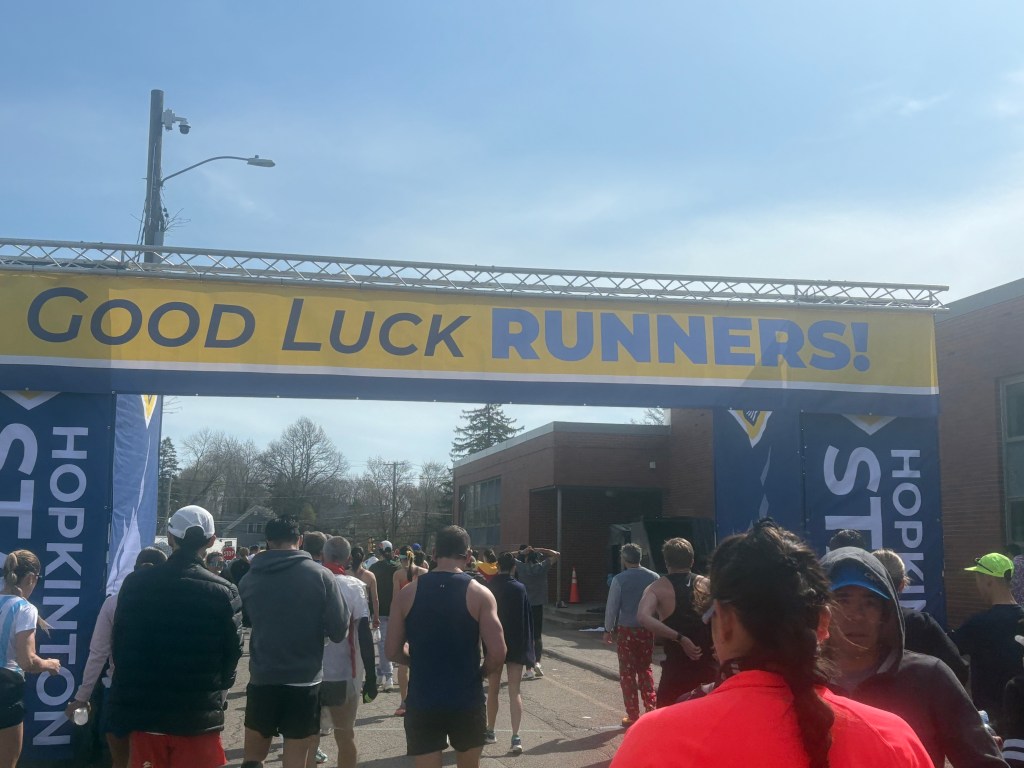
I ran the Boston Marathon in 2015 at age 29 with an incredibly flexible job at the height of my trail running obsession as I was gearing up for a 100 miler. I came away with a still-standing PR, en route to running a 40 miler race the next weekend. Fast-forward 10 years, I went into Boston at 39 with (at that point) undiagnosed PMDD, a pretty demanding job, and a 1.5 year old beagle, all of which kept me at a fraction of the miles I was putting in all of those years ago.
I knew my training was garbage. Every third long run would be the victim of inescapable fatigue and muscle soreness. Morning runs were sacrificed until the evening, which always seemed to end up shorter than desired. My weekly mileage never hit 50 once. Regardless, I was pumped to race Boston for the second time and thought my past self/training was enough to overcome my present self/training (or lack thereof). Spoiler alert – it wasn’t. But I did learn some lessons on that road from Hopkinton to Boston.
- Having a training plan and a race-day strategy isn’t enough. They both must be (honestly) based on your training and actually executed, regardless of what you’ve done in the past.
As someone with ADHD, I love to plan and love to plan to plan. I love planners and journals for all these plans. I love finding training plans and tailoring them to my schedule. The problem isn’t the lack of planning; it’s the following through. And up until a few years ago, running had escaped my graveyard of to-do lists and plans that never get done. Back then, if I had a training plan, whether it was one bought and paid for or one I created, I was following that sucker to the letter. No excuses at all. Unsurprisingly, for years, my running performance reaped the benefits of a sticking with a structured plan and putting in mile after mile.
For this Boston, however, not only was my training plan too lofty for the base I had going into it, but it also essentially became just a vision board of runs I’d get to when I felt like it or runs I wanted to do but instead settled for less (such as long run workouts or progression runs that never transpired). I had the tools at my disposal, but for countless reasons (not excuses!), I didn’t execute. I wandered aimlessly, picking and choosing certain prescribed runs here and there, but mostly operated “by feel,” and I can say 98% of the time, I wasn’t feeling good.
The same was true for my race-day strategy. I had a plan that I thought was good enough. I’d start “slowly” for the first half and then incrementally increase the pace every mile after that. The first problem was, my “slow” pace was faster than any pace I ran during long runs, which typically would be fine if volume and speed during the week were there, and they were not. While not lofty, this plan was also not realistic for me, given my aforementioned training. Even so, I still did not follow it. Like at all. The downhill-ish start had me feeling gooood, and I took off like I was at the final two miles instead of the first two. I saw a pace on my watch that I had zero business seeing and continued that pace for another 5-6 miles. Much like one does when racing a 5k, you find an uncomfortable pace during the first quarter of the race and then just try to hang on for the remaining ¾. I tried that but with 21 miles left to go. Needless to say, I blew up bigger than Walton Goggins has this year.

Like with my race day “strategy”, I thought the ability of my former self who ran Boston a decade prior would be enough or that I could “get away” with shorter runs, missing workouts, or fewer mileage. (I am aware of how ridiculous this is. Truly.) However, my Strava pace chart on April 21, 2025, serves as a picturesque representation of positive splitting a race and a reminder that innate ability (especially one last seen when Barry O was still in office) can’t always overcome a dearth of training and preparation or the failure to execute on either. Our past selves can’t manifest just because we’d like them to. We have to either continuously put in the work or adjust our expectations to our present reality.
“Complacency creates a blatant disregard for doing what’s right.”
Nick Saban has said, “Complacency creates a blatant disregard for doing what’s right.” Complacency was certainly the by-product of my running and racing history. And I blatantly disregarded the work necessary to execute a race at expectations that were steeped in the past.
- There is power in support and human connection, literally.
Except for occasional group runs, I am mostly a solo runner. I like to listen to my Dan Lebatard podcast during long runs and some Springsteen and Taylor Swift for workouts. Even though I know running with others would benefit me based on competitiveness alone, and I love being a part of the running community, I just gravitate towards my independence when it comes to the actual act of running. So, an environment such as Boston with its 30,000 people deep field and thousands of spectators the entire length of the course lies in stark contrast to my lone wolf mode. And thank goodness for it.
When I blew up early in the race, there were people every step of the way – other racers, volunteers, spectators – that absolutely spurred me on and kept me going. Even when, at times, I wished they would just let me wallow and indulge in self-pity, particularly those who were passing me. Obviously, this isn’t breaking news to anyone who’s run a race. The people are what make it. But in the past, I’ve taken all these cheers for granted. Never before have I texted my mom mid-race to say I’m probably just going to walk the rest, while actively restraining myself from calling her because I know I’ll start crying (did I mention I started my period during the race?). So, I’ve never had to rely on the collective energy from others to keep me from walking off a course. Nor have I ever taken the time to high-five every kid (or adult) with their hand out or punch every “power up” sign, but this time I did. And each time, I truly felt a burst of energy and a rush of happiness that I have missed out on in past races during which I was taking myself or the race too seriously to slow down long enough for these moments. Taking note of the hilarious race signs and interacting with those holding good or obscure ones gave me a quick connection that helped me make it to the next sign or the next dog to pet. Seeing my buddy Hunter at the Altra tent just long enough to yell at him while heading towards that Citgo sign was enough to carry me for at least a mile. For me, this was not a solo finish, but a finish built on the cheers and the actual connections with others via a high-five. Without them, I may still be in Newton somewhere, trying to find my spirit and will to live.
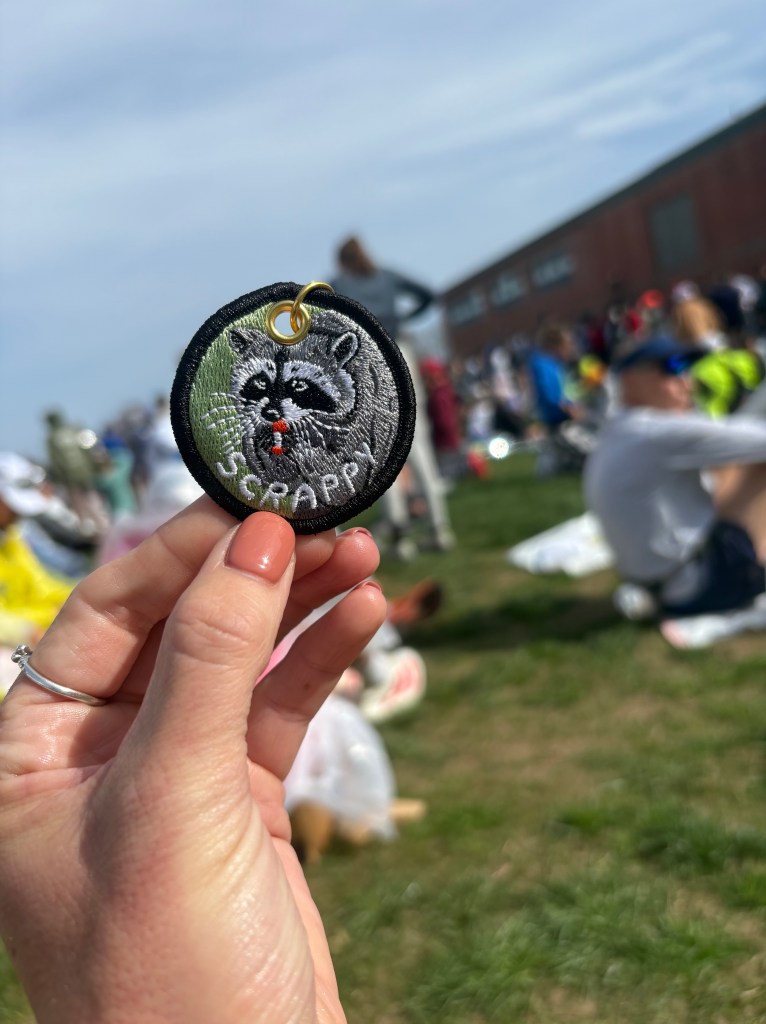
- You are not your time.
My finish time at Boston was over 40 minutes slower than my qualifying race. One of my first thoughts upon finishing was how embarrassing that fact was and what were people going to think about that/me. After all of the texts from friends and after scrolling Strava, I realized no one cares about your finish time and certainly no one will remember it. I can’t tell you anyone else’s time, including friends and NRC Race Team members, and it’s not because I don’t care about their running. But it’s because a person’s time, whether good or bad, at one (or any) race doesn’t define them as a runner or a person. Any person can have a singularly good or bad day on any given course. Each of us have fallen to pieces during a race, and each of us have outrun their training to a surprisingly great race. All anyone else will remember about those races, if they remember at all, is that you finished. While the race itself may be a celebration and culmination of months-long hard work and training, a finish time isn’t always a true indicator of them and can be subject to the whims of mother nature, life leading up to the race, or GI issues roulette. Finish times depend on a confluence external and internal circumstances all while being relative to the finishers themselves. No matter what though, the important part of “finish time” is not the time but the finish. I had jusr fought for my life out there, and instead of being pumped that I was able to get it done and make that turn onto Boylston, I was afraid of what others would think. Now, that is way more embarrassing than any numbers on the clock.
The weekend in Boston was perfection – from the weather to playing tourist with my parents to the entire race atmosphere. And though the race itself was far from great, it was perfectly imperfect and provided me with key takeaways that will help me improve my running and my future race experiences. And that is wicked cool.
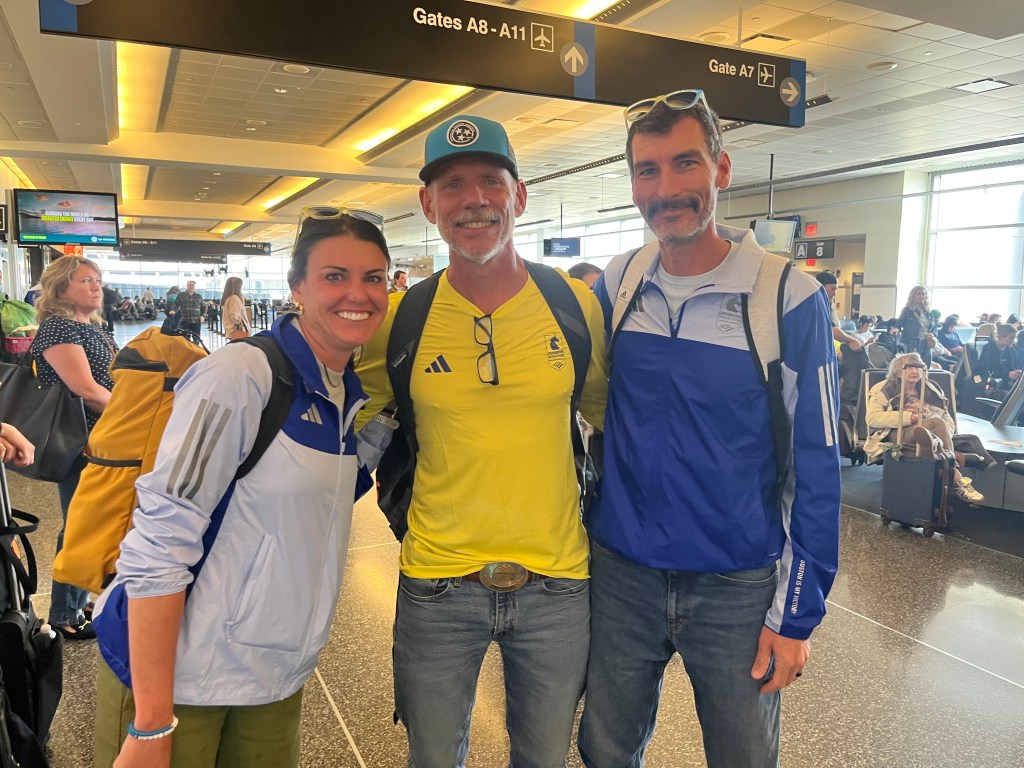
What lessons have you learned from a difficult (or great!) race performance??

 Bored Sighs
Leave a comment